Why EV infrastructure, not vehicles, will determine Africa’s mobility transition
Earlier this year, commentary on long queues at EV battery swap and charging stations gained traction across Nairobi’s social media. Beyond reflecting rider frustrations, the queues highlighted a broader reality: EV adoption is outpacing the infrastructure needed to support it.


Earlier this year, commentary on long queues at EV battery swap and charging stations gained traction across Nairobi’s social media. Beyond reflecting rider frustrations, the queues highlighted a broader reality: EV adoption is outpacing the infrastructure needed to support it.
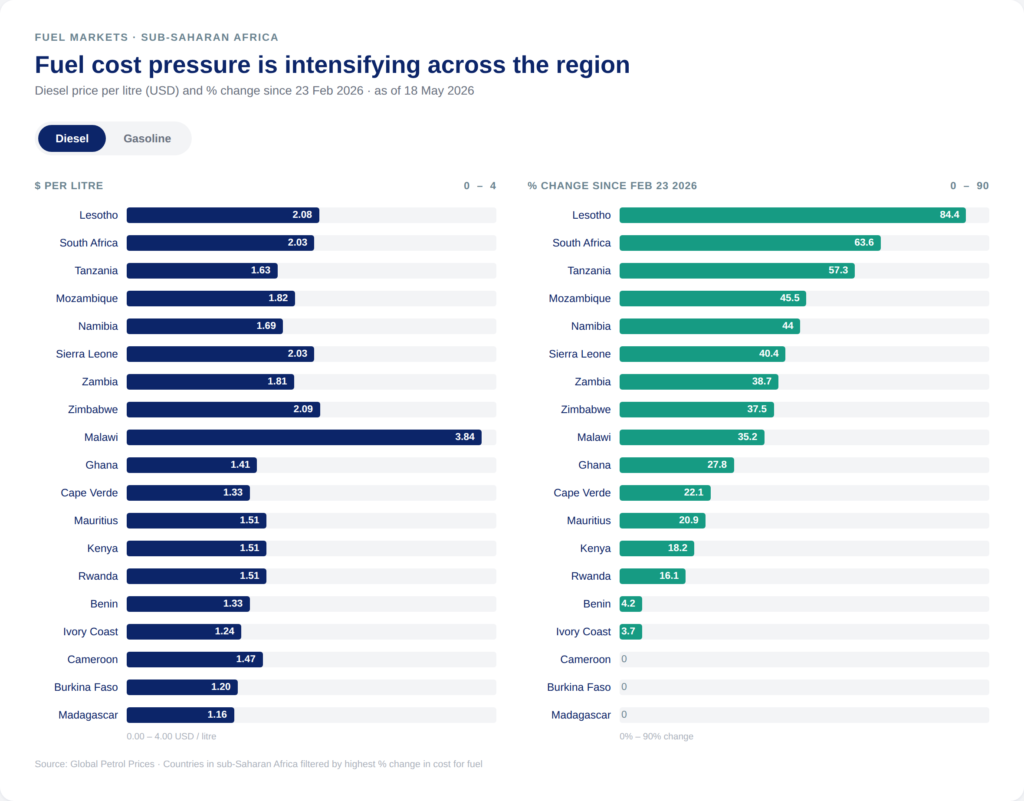
At the same time, recent volatility in global oil markets has exposed a structural vulnerability across many African transport systems: heavy dependence on imported fossil fuels leaves operators acutely exposed to price shocks. In this environment, lower-cost and more predictable electric mobility solutions are becoming increasingly attractive.
Africa imported 44,358 electric vehicles from China in 2025, according to data from China’s Commerce Ministry, more than double the 19,386 imported the previous year. Adoption is accelerating particularly quickly in the two-wheeler segment. The International Energy Agency estimates that electric two-wheeler sales in Africa reached 70,000 units in 2025, up nearly eightfold from 9,000 in 2024. Every additional vehicle, however, increases demand for charging, battery-swapping, and supporting energy infrastructure. The challenge is that these enabling systems are not scaling at the same pace as vehicle adoption.
The scale of Africa’s two-wheeler transport economy underscores the magnitude of the infrastructure challenge. Nigeria accounted for more than 42% of Africa’s two-wheeler market volume in 2025, while Kenya alone has an estimated three million motorcycle taxi riders. Even a modest shift toward electrification across these markets would require charging and battery-swapping infrastructure deployment at significant scale.
In markets of this size, bottlenecks at swap stations and pressure on charging networks are not signs of a sector in distress; they are indicators of demand rapidly outpacing the systems being built to support it.
In many emerging electric mobility markets, the question is no longer whether riders are willing to adopt EVs. It is whether the broader infrastructure ecosystem, including charging, swapping, grid capacity, and financing, can scale quickly enough to keep pace.
The economics of two-wheeler electrification
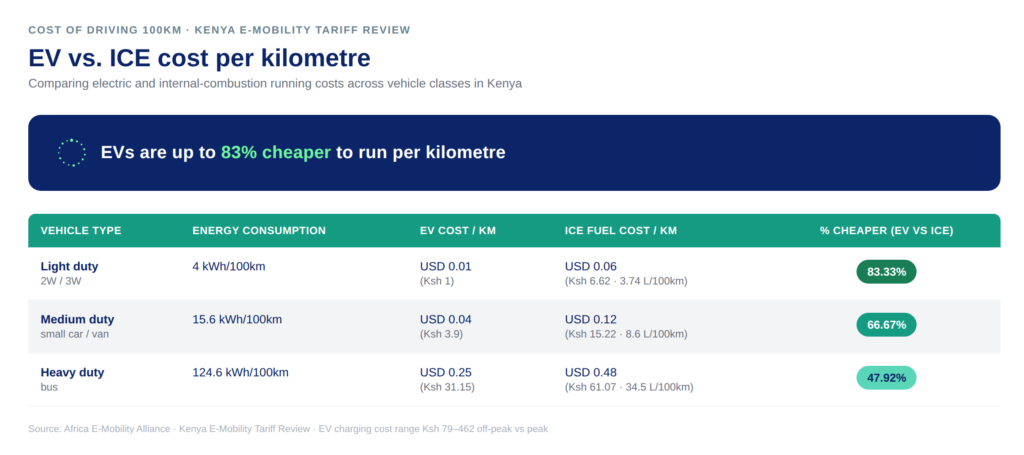
The Africa E-Mobility Report 2025 estimates that electric two-wheelers (E2Ws) incur energy costs of approximately US$0.01 per kilometer, versus US$0.06 for internal combustion engine (ICE) motorcycles. Electric buses similarly incur energy costs of around US$0.25 per kilometer compared to US$0.48 for ICE buses. For high-utilization transport operators, the economics are increasingly compelling. Lower energy costs improve margins directly, while greater protection from fuel price volatility improves income predictability.
Yet infrastructure reliability remains one of the sector’s biggest constraints. For commercial transport riders, the decision to switch to electric mobility is not determined by vehicle economics alone. Riders need confidence that charging or battery-swapping infrastructure will be available throughout their route.
A motorcycle taxi operator cannot risk accepting a long-distance fare without confidence that a battery swap will be available for the return journey.
Specialization is reshaping Africa’s EV ecosystem
In the early stages of Africa’s EV market, operators had little choice but to build entire ecosystems themselves. Many companies simultaneously manufactured vehicles, deployed batteries, installed charging infrastructure, and managed day-to-day operations.
This vertically integrated model enabled early market entry, but it also constrained expansion, with many first movers only able to scale as quickly as their balance sheets allowed.
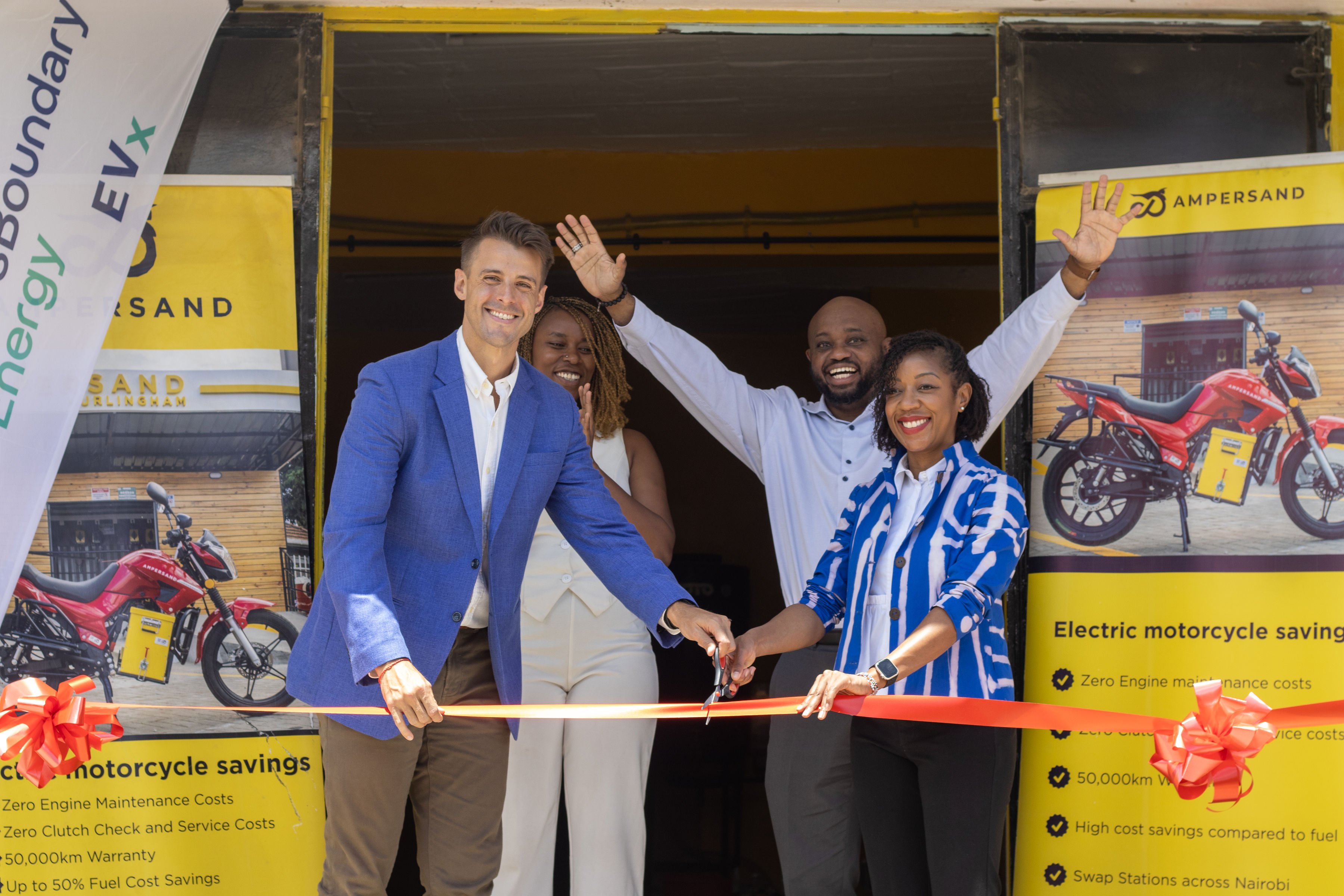
Increasingly, infrastructure and financing partners such as CrossBoundary Energy EVx are helping decouple infrastructure deployment from vehicle operators. This allows operators to scale without carrying the full capital burden of building charging and battery-swapping networks themselves. In Ampersand’s case, EVx supported the scaling of charging infrastructure, reducing balance sheet pressure and allowing the company to focus more directly on its core business: electric motorcycles and battery-swapping services.
One of the clearest signs of the sector’s maturation is the emergence of more specialized business models. Rather than building entire ecosystems themselves, companies are increasingly focusing on distinct parts of the value chain, from vehicle manufacturing and battery-swapping services to charging infrastructure and financing.
According to the African E-Mobility Alliance, there are now 208 active e-mobility companies operating across Africa, with East Africa accounting for nearly half of the market. Two-wheelers remain the dominant segment, representing 44% of companies in the sector, while charging infrastructure providers account for just 15% — underscoring both the scale of the infrastructure gap and the growing importance of enabling assets.
As the market matures, this disaggregation may improve efficiency across the value chain while creating more clearly defined investment opportunities. Infrastructure assets, vehicle operations, and financing platforms each have distinct risk-return profiles, making them easier for different types of capital providers to evaluate and support.
Recent transactions point to growing investor confidence in the sector:
- Spiro closed a US$270M investment round, the largest investment in African two-wheel electric mobility and was backed by major institutional investors such as Impact Fund Denmark and Equitane
- BasiGo secured a US$42M financing package to expand e-bus assembly capacity and deploy 1,000 buses across Kenya and Rwanda by 2029
- GOGO Electric received a US$3M equity investment from the Uganda Development Bank to expand manufacturing and strengthen infrastructure deployment
Still, early-stage equity financing alone will not be sufficient to scale the sector. As adoption accelerates, long-term debt, infrastructure financing, and revenue certainty will become increasingly important.
Policy will determine where capital flows
While infrastructure financing is essential, its deployment remains highly sensitive to regulatory conditions. Policy clarity and consistency are emerging as key differentiators between markets. While short-term incentives can support early market growth, investors ultimately require stability around tax structures, tariffs, and regulatory frameworks before committing long-term capital.
Recent developments in Kenya illustrate how policy uncertainty can affect investor sentiment. Earlier in the year, Kenya’s Finance Bill 2026 proposed reclassifying electric two-wheelers, electric buses, and lithium-ion batteries from zero-rated to VAT-exempt status. While subtle in appearance, the change would have prevented importers and assemblers from recovering input VAT, likely increasing costs across the value chain.
The proposal also appeared to contradict the government’s broader policy direction. At the February 2026 launch of Kenya’s National E-Mobility Policy, Roads and Transport Cabinet Secretary Davis Chirchir highlighted these same tax incentives as part of the country’s strategy to accelerate e-mobility adoption.
The tax proposal attracted sustained lobbying by the e-mobility and manufacturing sectors and was ultimately reversed in a June 2026 parliamentary process. Nonetheless, abrupt policy shifts of this nature can introduce uncertainty into long-term investment decisions and weaken private sector confidence.
While many governments have focused on policies that encourage vehicle adoption, infrastructure investment depends on a different set of considerations. As the challenge shifts from EV adoption to infrastructure bankability, policymakers must increasingly focus on creating the conditions that allow long-term infrastructure investment to scale.
This is particularly important for charging infrastructure, which remains a regulatory grey area in many markets. Where pricing frameworks are unclear or subject to future caps, investors face greater difficulty underwriting projects at scale.
Ultimately, the strongest policy frameworks do three things well: they align incentives across the value chain, define how tariffs work in practice, and clearly allocate regulatory risk. These are the foundations upon which long-term infrastructure investment decisions are made.
Solving the infrastructure gap
Despite strong underlying demand and supportive market fundamentals, the sector still faces a classic chicken-and-egg problem. Infrastructure investors want evidence of sufficient demand before committing capital, while widespread EV adoption depends on the availability of reliable charging and battery-swapping networks. Resolving this tension requires a shift in how infrastructure is financed and deployed.
Infrastructure-focused platforms are beginning to play a catalytic role. By financing energy infrastructure independently of vehicle operators, these platforms help decouple infrastructure deployment from operator balance sheet constraints.
The result is a more scalable model that allows vehicle adoption and infrastructure growth to expand in parallel rather than sequentially. This reduces the risk that infrastructure deployment becomes a bottleneck precisely at the point when vehicle adoption begins to accelerate.
Electrification beyond transport
The case for electric mobility in Africa extends beyond transport efficiency. It is increasingly being viewed as both an energy security and macroeconomic strategy amid recent geopolitical disruptions that have affected both fuel prices and supply chains.
Many African economies remain heavily dependent on imported fossil fuels, placing sustained pressure on foreign exchange reserves and exposing transport systems to global oil price volatility. For net oil-importing countries, transport fuel represents a significant drain on foreign exchange. Electrification creates an opportunity to meet a portion of that energy demand through domestically generated power, strengthening economic resilience and energy security. Realizing those benefits, however, depends on the deployment of the charging, battery-swapping, and energy infrastructure needed to convert locally generated electricity into a viable transport fuel at scale.
This dynamic is particularly important in African markets where mobility remains overwhelmingly commercial and public transport-led. According to Energy for Growth Hub, Africa averages roughly 43 vehicles per 1,000 people, compared to a global average of 197 per 1,000. As a result, Africa’s EV transition may evolve differently from Europe or North America, with electrification likely to scale first through high-utilization transport systems rather than private passenger vehicle ownership.
What comes next
Africa’s electric mobility transition is entering a new phase. The initial question of whether EVs are viable in African markets has largely been answered. The next phase will be defined by how quickly the supporting infrastructure ecosystem can scale.
For investors and funders, this presents a clear opportunity. Infrastructure remains undercapitalized relative to demand, while utilization rates and revenue visibility are becoming increasingly attractive. Catalytic and concessional capital can play an important role in accelerating deployment and crowding in private investment.
For operators and original equipment manufacturers, increasing specialization offers a pathway to scale without overextending balance sheets. And for policymakers, the priority is becoming clearer: long-term regulatory certainty will determine which markets attract infrastructure capital at scale.
Africa’s EV transition is unlikely to be constrained by vehicle availability or consumer demand. The defining question is whether infrastructure deployment can keep pace. The markets that provide long-term policy clarity and bankable infrastructure frameworks will be best positioned to lead the continent’s mobility transition.
Related Insights
View all-
 11.11.2025Blog
Kenya charges ahead with approval of first solar-to-charging station license
-
 29.10.2025Announcement
Ampersand Energy’s electric two-wheelers get a renewable boost from CrossBoundary Energy EVx in Nairobi
-
 11.03.2025Article
Electrifying Africa’s roads—and the economy—is closer than you think