Why African mines should rethink energy resilience
For African mines and industrial businesses, renewable energy has largely been discussed as a way to lower electricity costs and reduce emissions. Both remain important, but a third consideration, energy resilience, is becoming even more strategic.

For African mines and industrial businesses, renewable energy has largely been discussed as a way to lower electricity costs and reduce emissions. Both remain important, but a third consideration, energy resilience, is becoming even more strategic.
El Niño, hydropower vulnerability, and global fuel disruption are converging into a new energy-security challenge for African mines and industrial businesses, causing grid unreliability precisely when the diesel required to replace it becomes more expensive and harder to deliver. A resilient energy supply allows an operation to keep producing when part of the energy system comes under pressure. This could result from drought, grid constraints, fuel price shocks or disruptions to fuel supply.
In several African markets, mines and other energy-intensive industries face two risks that are increasingly capable of reinforcing one another. The first is climate-related electricity risk. The World Meteorological Organization forecasts a nearly 100% likelihood that El Niño will persist through February 2027. For Southern Africa, the more immediate concern is rainfall: SADC’s 2026/27 seasonal outlook favors below-normal rainfall across much of the central and southern region, including parts of Zambia.
The second risk is global fuel market disruption. Conflict in the Middle East has affected oil production, refining, and shipping routes while increasing freight and insurance costs. The International Energy Agency has described the current disruption as the largest oil-supply disruption on record. Individually, either risk can materially affect industrial energy costs. Together, they create a more serious compound exposure.
From energy secure to vulnerable in one season: Zambia’s drought experience
The 2024 Southern African drought demonstrated how quickly climate conditions can translate into industrial power shortages: at the time, approximately 85% of installed electricity capacity was hydropower-based, and Zambia’s 2023/24 rainy season was its driest agricultural season in more than four decades.
Lake Kariba is central to Zambia’s power system. On the Zambian side of the reservoir, the 1,080 MW Kariba North Bank Power Station is one of the country’s largest generating assets, using stored water from the lake to provide electricity throughout the year. In June 2024, the drought had reduced available water to such an extent it could support only around 98 MW of generation at Kariba North Bank — roughly 10% of the plant’s 1,080 MW installed capacity. As hydropower output fell, load shedding intensified, Zambia relied more heavily on electricity imports, and emergency tariff measures followed. Mines were forced to curtail their power consumption, source power from alternative grids, and even rely on diesel backups.
Conditions at Kariba have improved significantly since 2024. However, below-normal rainfall forecast for parts of Zambia during the 2026/27 rainy season could slow reservoir replenishment and put renewed pressure on hydropower availability in 2027. The immediate concern is not a repeat of the 2024 drought, but renewed hydropower constraints occurring at the same time as greater volatility in global fuel markets.
When the grid fails, diesel has traditionally filled the gap
For many African industrial operations, diesel generation has historically been the ultimate fallback. When the grid fails, generators run. That assumption deserves reconsideration. Approximately 20 million barrels of oil and petroleum products moved through the Strait of Hormuz per day in 2025 – roughly one-quarter of global seaborne oil trade. The Gulf is also a major refining and product-export center; the IEA estimates regional refined-product exports of approximately 3.3 million barrels per day in 2025.
For landlocked operations in Africa, fuel can travel hundreds or thousands of kilometers through ports, pipelines, borders, and trucking corridors before reaching site. The price paid at site therefore reflects much more than the international crude price. Refining margins, ocean freight, insurance, port costs, inland transport, foreign exchange and local taxes can all amplify a global oil-market shock before the fuel reaches the mine.
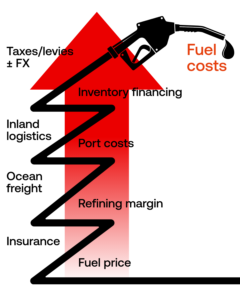 The greatest exposure arises when these pressures hit at the same time. Poor rainfall reduces reservoir inflows and hydropower output, weakening grid availability and forcing mines to run generators more frequently. Meanwhile, tighter product markets, higher freight and insurance costs, and disrupted supply routes make diesel more expensive and less predictable. The result is a double exposure: operations need more backup fuel at exactly the point when that fuel is hardest and most expensive to secure.
A more resilient energy system reduces dependence on any single source of electricity or fuel. That can mean combining solar PV, wind, battery storage, grid supply and thermal backup, with each resource serving a different role in the system. Once deployed, solar PV and BESS can reduce an operation’s exposure to fuel-price and fuel-supply shocks because their day-to-day operation does not depend on continuous fuel deliveries. In addition:
- BESS provides fast-response power, shifts renewable energy to different hours, supports grid stability and, where systems are designed for it, enables limited islanded operation.
- Solar reduces dependence on grid electricity and diesel during daylight hours.
- Wind can provide a complementary generation profile to solar, producing during different hours and seasons.
- Grid power remains an important part of the supply mix where it is reliable and competitively priced.
- Thermal generation provides contingency capacity for periods when other sources are unavailable, without needing to serve as the primary source of electricity.
A practical step toward energy resilience is to move diesel from a routine source of electricity to a controlled contingency resource. Fewer liters purchased, transported, and stored means lower exposure to fuel markets and logistics corridors.
Moving beyond energy procurement to energy resilience
Industrial energy strategies have traditionally focused on cost per kilowatt-hour. That metric remains important, but it does not capture the full economic risk exposure of an energy-intensive operation. A more pressing question for boards and management teams is what happens to production if grid availability falls by 30%, diesel prices rise by 50%, or both happen at the same time? That requires looking beyond the electricity tariff to days of fuel inventory, the cost of an hour of lost production, dependence on individual grid connections or logistics corridors, and the share of energy costs that can be made predictable.
Through financed solar, wind, battery storage, and hybrid systems delivered under long-term power-purchase or Energy-as-a-Service structures, customers reduce fuel consumption, diversify electricity supply, and increase the proportion of energy costs that are predictable. This approach is already being deployed at large mining operations across the continent.
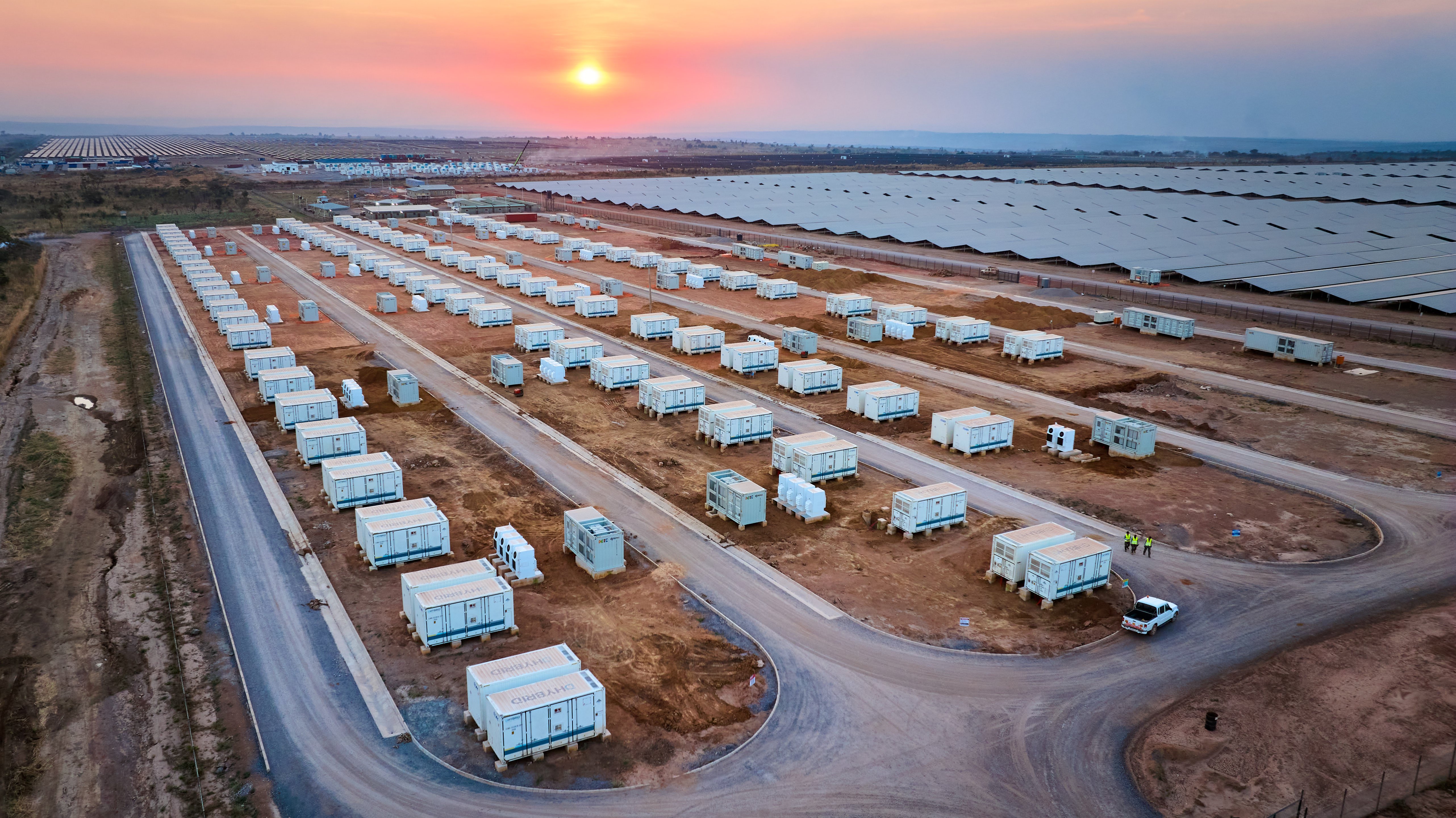
The Kamoa-Kakula Copper Mining Complex in DRC, owned largely by Ivanhoe, is supplied by a 30 MW, dispatchable solar/BESS power solution. During the first month of commercial operation, the project reduced diesel consumption by 4 million liters, avoiding an estimated US$11 million in diesel costs. Its value extends beyond cost savings: it reduces exposure to both grid instability and diesel consumption.
The QIT Madagascar Minerals mine in Madagascar, owned largely by Rio Tinto, combines approximately 14 MWp of solar, 16 MW of wind, 16 MWh of battery storage, and 21 MW of thermal generation.The combination diversifies supply while retaining firm thermal backup and allows the mine to operate for extended periods without burning fuel.
Blanket Mine in Zimbabwe, owned by Caledonia Mining Corporation, supplies 13.9 MWp solar PV, meeting around 21% of the mine’s electricity requirements under the published configuration. Every behind-the-meter megawatt-hour reduces the mine’s dependence on grid electricity or onsite generation.
For industrial businesses exposed to hydropower constraints, grid instability or fuel-supply shocks, the strategic response is to reduce the consequences of any one source becoming unavailable.
For mines and industrial businesses, building resilience therefore means:
- Diversifying electricity supply so that operations are not dependent on a single source
- Reducing routine diesel consumption and exposure to fuel-price and logistics shocks
- Increasing behind-the-meter generation where site conditions allow
Using battery storage to shift renewable energy and provide fast-response capacity - Retaining sufficient contingency capacity for prolonged grid or generation disruptions
The value of a resilient energy system is measured not only in the cost of each kilowatt-hour, but in the production it allows a business to protect when grid, climate or fuel-market conditions deteriorate.
Related Insights
View all-
 25.08.2026Announcement
Africa’s first solar and battery baseload facility reaches commercial operation in record time, signalling a new era for round-the-clock renewable power
-
 26.03.2025Article
Navigating eligibility criteria for Distributed Energy Resources in Africa
-
 27.11.2024Article
Distributed power, localized benefits: how decentralization of energy approvals in Africa can unlock industrial sectors